

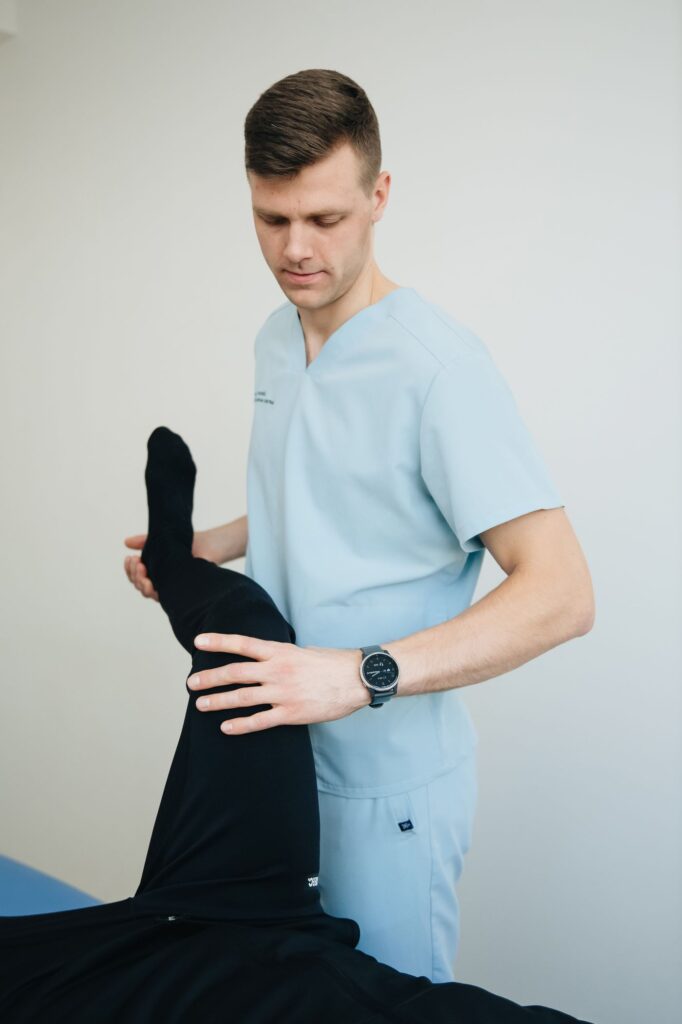
Hip pain is one of those complaints people tolerate for a remarkably long time. It starts as stiffness getting out of the car, becomes difficulty sleeping on one side, and eventually changes how far someone is willing to walk. By the time most patients seek hip pain physiotherapy in Ottawa, the problem has been present for months.
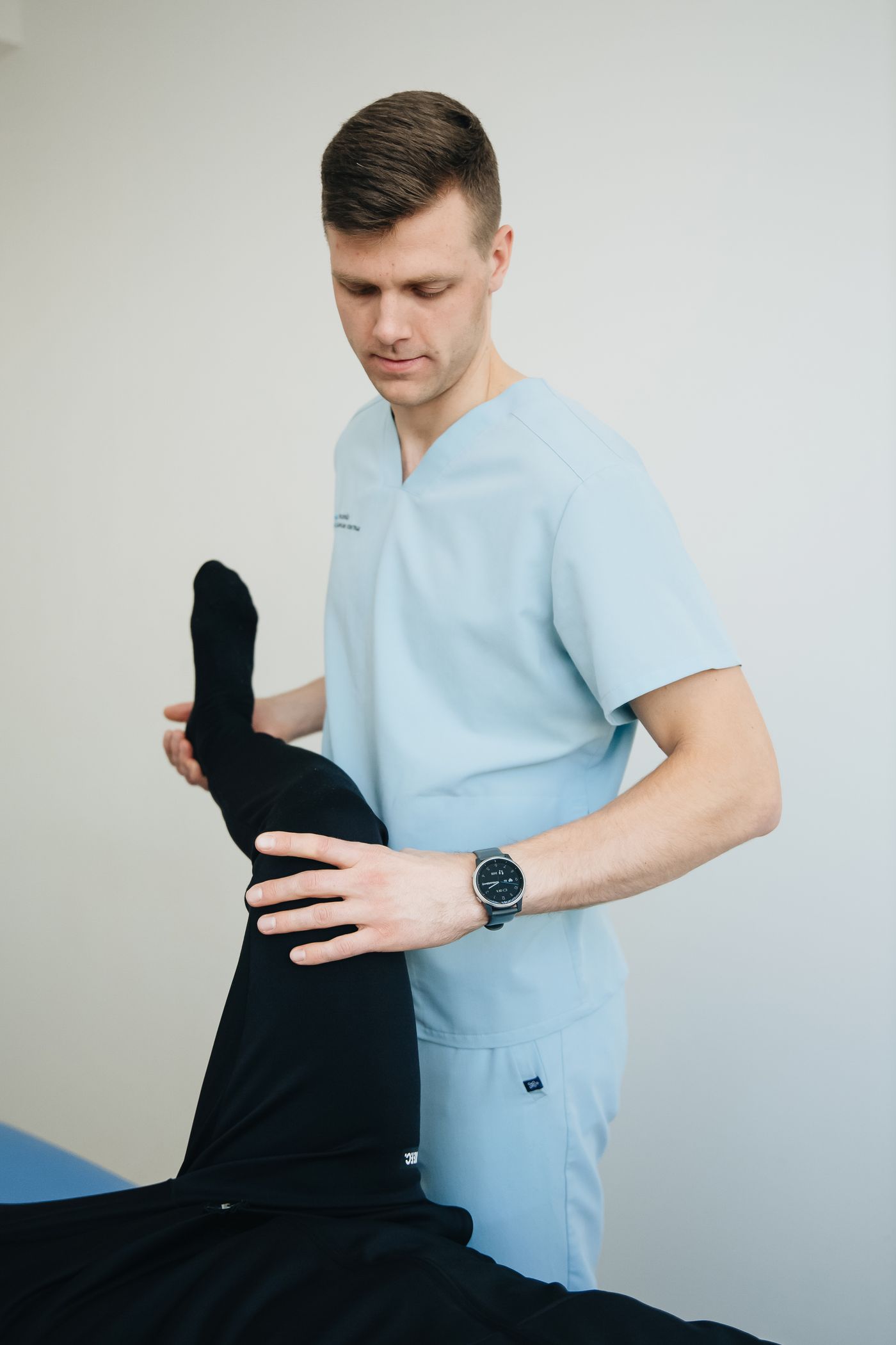
Part of the delay is confusion about what “hip pain” even means. The word covers several quite different problems, and where you feel the pain says a lot about which one you have.
Where the Pain Sits Tells You a Lot
Before anything else, locate it precisely:
- Groin and front of the hip — usually points to the hip joint itself, including arthritis or impingement.
- Outside of the hip, over the bony point — typically tendon or bursa related, and the most common cause of pain when lying on that side.
- Buttock — often the lower back or sacroiliac joint referring pain rather than the hip.
- Down the back of the leg — more likely nerve-related, such as sciatica.
This distinction matters because treatment differs substantially. Pain felt in the buttock and blamed on the hip is frequently a lumbar spine problem, and treating the hip will not resolve it.
Gluteal Tendinopathy: The Most Underdiagnosed Cause
Pain on the outside of the hip, tender to touch over the bony prominence, and worst when lying on that side at night or standing on one leg.
This was historically labelled bursitis, but current understanding recognises that the gluteal tendons are usually the primary problem. It is particularly common in women in midlife and beyond, and it is frequently mistaken for arthritis.
It responds well to progressive tendon loading — strengthening the gluteal muscles under controlled load — combined with modifying the positions that compress the tendons, such as sitting with crossed legs or standing with weight dropped onto one hip.
The encouraging part is that this is a very treatable condition once correctly identified.
Hip Osteoarthritis
Groin pain, stiffness that is worst in the morning or after sitting, gradual loss of range of motion, and sometimes a limp that develops slowly.
Arthritis involves changes to the joint cartilage, and while those changes cannot be reversed, the symptoms respond meaningfully to appropriate exercise. Strengthening the muscles around the joint reduces load through it, and maintaining range of motion preserves function.
Evidence consistently supports exercise as a first-line treatment for hip osteoarthritis. Many people assume the only options are painkillers or surgery, when structured arthritis treatment in Ottawa can substantially improve function and delay or avoid the need for intervention.
Hip Impingement and Labral Irritation
Groin pain with deep hip flexion — squatting, getting into a low car, or sitting for long periods — sometimes with catching or pinching sensations.
This tends to affect younger and more active adults. The shape of the hip joint means the bones make contact earlier in the range of movement than usual, irritating the surrounding tissue.
Treatment focuses on improving control and strength around the hip, modifying the specific positions that provoke symptoms, and working on movement patterns so the joint is loaded more favourably.
Referred Pain From the Lower Back
A meaningful proportion of “hip pain” is not coming from the hip at all. The lumbar spine and sacroiliac joint both refer pain into the buttock and outer thigh, and patients naturally describe that area as their hip.
Clues that point to the back include pain that varies with spinal position, symptoms extending below the knee, pins and needles or numbness, and a hip that moves freely and painlessly when tested directly.
A thorough assessment tests both regions, which is the only reliable way to separate them.
Why Hip Pain Persists
Several factors keep hip problems going longer than they should:
- Avoidance. Reducing walking and activity weakens the very muscles that support the joint.
- Aggravating positions maintained unknowingly — sleeping without a pillow between the knees, sitting cross-legged, standing hip-dropped.
- Stretching an irritated tendon, which often makes gluteal tendinopathy worse rather than better.
- Assuming it is age. Hip pain is common with age but is not an inevitable consequence of it.
Persistent hip pain that has been present for months often benefits from a structured approach through chronic pain physiotherapy in Ottawa, which addresses both the tissue and the movement habits that maintain it.
What Treatment Looks Like
Assessment comes first: establishing which structure is involved, testing hip and spine, and reviewing your daily loading patterns.
Treatment then typically combines progressive strengthening — usually gluteal and deep hip muscles — with range of motion work where restricted, load management advice for the positions that aggravate, gait retraining if walking pattern has changed, and hands-on treatment where useful for symptom relief.
Timelines vary considerably. Tendon problems in particular take time, because tendons adapt slowly. Consistency matters more than intensity.
Reducing Your Risk
Keep the hip muscles strong, particularly the glutes — this is the single most protective habit. Stay active with walking or cycling rather than reducing activity as a precaution. Avoid prolonged sitting without breaks. Use a pillow between the knees if side sleeping is uncomfortable.
And address problems early. Hip complaints caught within weeks are considerably easier to resolve than ones that have reshaped how you move over a year. A straightforward assessment through hip pain physiotherapy in Ottawa is usually enough to establish what you are dealing with.
Frequently Asked Questions
Why does my hip hurt more at night?
Night pain when lying on one side is characteristic of gluteal tendinopathy, because side-lying compresses the tendons against the bone. Lying with the top leg dropped across the body increases that compression further. A pillow between the knees often helps considerably, and it is a useful diagnostic clue as well as a practical fix.
Is hip pain always arthritis?
No, and assuming so leads to a lot of unnecessary pessimism. Gluteal tendinopathy, hip impingement, and referred pain from the lower back are all common and all quite treatable. Even when arthritis is present, exercise-based treatment meaningfully improves symptoms and function, so a diagnosis of arthritis is not a dead end.
Should I stretch a painful hip?
Not always — and with gluteal tendinopathy, aggressive stretching often makes things worse by further compressing irritated tendons. Whether stretching helps depends entirely on the diagnosis. This is one of the more common reasons people find their self-managed hip pain is not improving despite consistent effort.
Can physiotherapy help me avoid hip replacement surgery?
For many people with hip osteoarthritis, exercise-based treatment substantially improves pain and function, and is recommended as a first-line approach before surgical options are considered. Whether it avoids surgery entirely depends on the individual and the extent of joint changes, but it is well worth trying properly first.
How long does hip pain take to improve with treatment?
It varies with the cause. Some presentations settle within weeks; tendon-related problems typically take longer because tendons remodel slowly. What matters most is consistency with the loading programme rather than intensity. Steady progress over a couple of months is a realistic expectation for most hip complaints.
Final Takeaway
Hip pain is not one condition. Where you feel it — groin, outer hip, or buttock — points to quite different problems with quite different treatments, and getting that distinction right is most of the battle.
Most causes respond well to appropriate strengthening and load management, including arthritis. What does not help is waiting it out, avoiding activity, or assuming it is simply age.
Book Your Hip Assessment in Ottawa
StayFit Physio – Ottawa
Merivale Clinic
1580 Merivale Rd #403, Nepean, ON
Phone: (613) 225-8956
Barrhaven Clinic
2201 Jockvale Road, Unit 2, Nepean, ON
Phone: (343) 588-5855
Hip pain affecting your sleep or how far you walk? Book your assessment today and find out exactly what is causing it and what will actually help.